
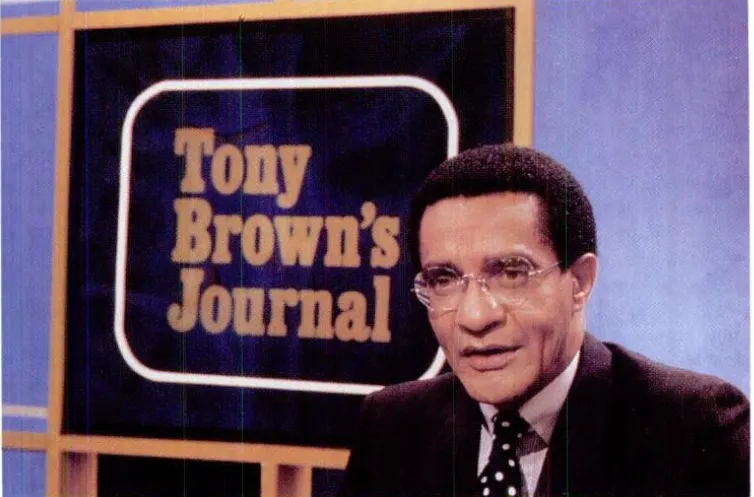
Tony Brown was a television journalist, broadcaster, and educator who spent more than five decades building Black American media and who is best remembered as the host of Tony Brown’s Journal, the public affairs programme that became the longest-running Black-produced television series in American history. He died on 17 June 2026 in Newport News, Virginia, from coronary heart disease at the age of 93.
He was born William Anthony Brown on 11 April 1933 in Charleston, West Virginia, into a household that reflected the constraints and the possibilities of Black working-class life in the segregated South. He moved north as a young man and attended Wayne State University in Detroit, where he pursued his education in social work before journalism drew him into the media world. His early career coincided with the period of greatest urgency in the civil rights movement, when Black media organisations were simultaneously chronicling the struggle for equality and attempting to build sustainable institutional alternatives to white-owned outlets that consistently undercovered or misrepresented Black American life.
He conceived and launched Tony Brown’s Journal in 1970, initially as a production of WNET in New York, and the programme was picked up by PBS stations across the country. The show addressed political, cultural, and economic issues affecting Black Americans with an independence of perspective that distinguished it from both mainstream television and from the more advocacy-driven media of the civil rights organisations. Brown was willing to interview figures from across the political spectrum, including conservatives whose views were unpopular within mainstream Black political discourse, reflecting his conviction that Black America needed engagement with all the forces shaping its circumstances. The programme ran for decades and accumulated a body of journalism that constituted a sustained archive of Black American public life from the Nixon era through the Obama years.
He was appointed dean of the Howard University School of Communications in 1971, and later joined Hampton University as the inaugural dean of the Scripps Howard School of Journalism and Communications in 2004, bringing his convictions about the necessity of Black institutional media to the university training of the next generation of journalists. His work as an educator complemented his broadcasting career, providing a pathway for young Black journalists at a time when mainstream newsrooms remained resistant to meaningful integration at senior levels.
He wrote several books and pursued independent film projects, including the documentary and dramatised film work that accompanied various stages of his broadcasting career. He was a vocal proponent of Black economic self-sufficiency and argued consistently that political progress without economic foundations remained fragile. His longevity in American public life, from the civil rights era through the internet age, was a product of the consistency of his convictions and the discipline with which he pursued them. He was 93 years old.