
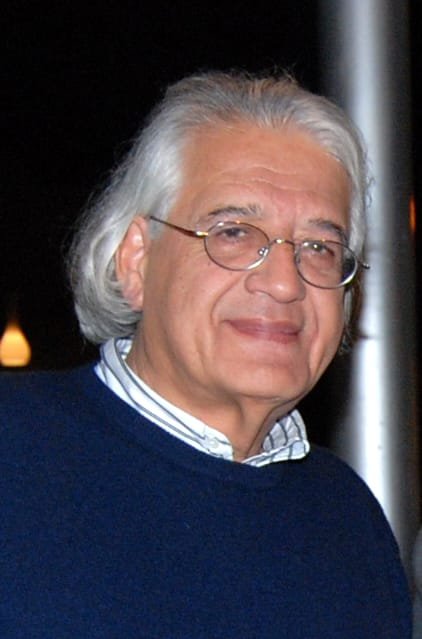
Patricio Guzmán died on September 15, 2026, in Paris. The Chilean film director was 85. His death followed cardiorespiratory arrest.
Guzmán leaves behind a body of work that tracked his country's political rupture for six decades. He was born Patricio Guzmán Lozanes in Santiago on August 11, 1941. His career in documentary film stretched from the 1960s to 2026, and included work as a screenwriter, producer, editor and actor.
He became most closely associated with The Battle of Chile, his landmark film project from 1975 to 1979. The work documented the fall of Salvador Allende's government and the rise of Augusto Pinochet. It remains a central text of political cinema, watched and taught across the world.
Guzmán later built a second trilogy on themes of memory and landscape. It comprised Nostalgia for the Light, The Pearl Button and The Cordillera of Dreams. Those films moved between astronomy, geology and the search for the disappeared, keeping the question of Chile's past in public view.
He also taught documentary film classes in Europe and Latin America. In 1997 he founded and directed the International Documentary Festival of Santiago, known as FIDOCS. The festival became a meeting point for nonfiction filmmakers from across the region.
Guzmán's death closes a long arc that began in Santiago and ended in Paris. He had lived in France for years, working from exile while continuing to make films about Chile. His final works were completed in his mid-eighties, and he remained active in cinema until the end.
The cause of death was given as cardiorespiratory arrest. No further details have been released. He died in Paris, where he had long been based.
His films were defined by a persistent question: what happens to a country that refuses to look at its own history. The Battle of Chile was shot in the months before the 1973 coup, and its footage of the military takeover became essential evidence of what occurred. Guzmán had hidden the reels and smuggled them out of the country, preserving a record that the dictatorship sought to erase.
The later trilogy continued that project through different means. Nostalgia for the Light linked the Atacama Desert's astronomers with the women searching for the remains of the disappeared. The Pearl Button connected the Pacific Ocean, its indigenous peoples and the bodies thrown into the sea. The Cordillera of Dreams returned to the mountains that frame Santiago, asking what they witnessed.
Guzmán's approach was patient and observational. He let images carry meaning. His films were shown at festivals in Europe and the Americas, and he received international recognition for his work, though he remained based in Paris rather than returning permanently to Chile.
His teaching work took him across Europe and Latin America, where he influenced younger documentarians. FIDOCS, which he founded and directed, provided a platform for filmmakers working outside commercial structures.
Guzmán was born in Santiago on August 11, 1941. He died in Paris on September 15, 2026, at age 85, following cardiorespiratory arrest. The city where he spent his exile is where his life ended.
According to Dead-People.