
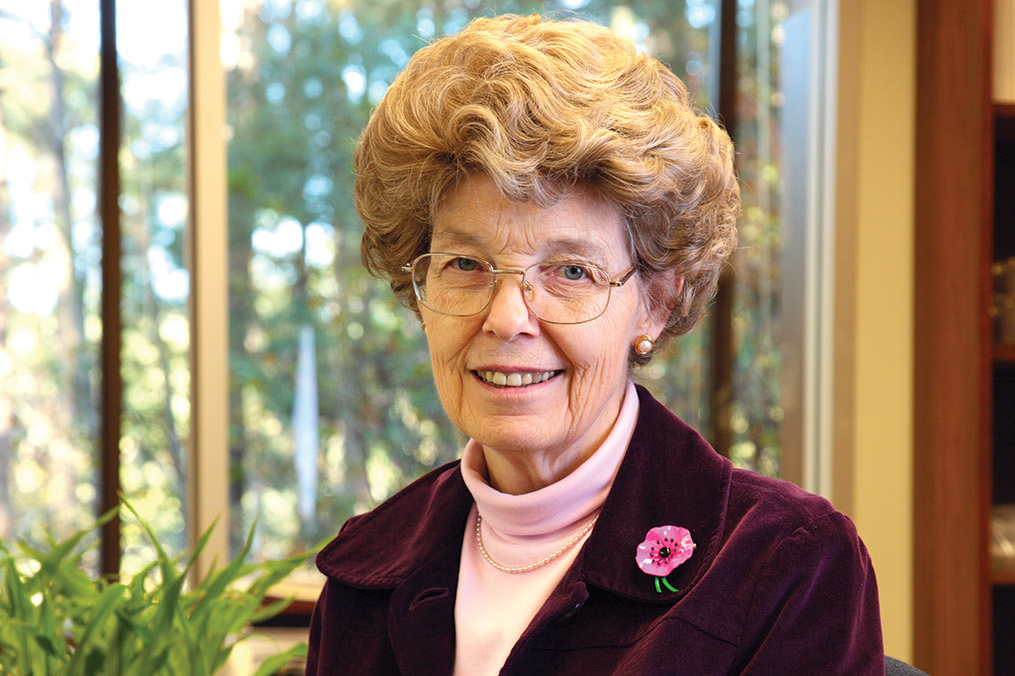
Mary-Dell Chilton was an American biochemist known professionally as the Queen of Agrobacterium whose foundational research in the 1970s demonstrated that the soil bacterium Agrobacterium tumefaciens could transfer DNA directly into plant cells, a discovery that underpinned the entire field of plant genetic engineering and led to the creation of the world’s first genetically modified plant in 1982. She died on 24 June 2026 in Carrboro, North Carolina, at the age of 87.
She was born on 2 February 1939. She completed her doctoral training in biochemistry and joined the faculty of Washington University in St. Louis, where she assembled the research team that would pursue the question of how Agrobacterium causes crown gall disease in plants. Crown gall, a tumour-like growth that forms on the stems and roots of plants infected with Agrobacterium, had been recognised as a disease for decades, but the mechanism by which the bacterium caused it was poorly understood. In the 1970s, Chilton and her colleagues determined that the answer lay in a remarkable biological transfer: the bacterium contained a large plasmid, a circular DNA molecule known as the Ti plasmid, and when it infected a plant it excised a portion of that plasmid, called T-DNA, and inserted it into the plant’s own chromosomes. The T-DNA then directed the plant cells to produce compounds that fed the bacterium and caused the tumour phenotype.
The implication was immediately apparent to researchers in molecular biology: here was a natural mechanism by which foreign DNA could be stably integrated into a plant genome. If the genes responsible for the tumour-forming properties could be removed from T-DNA and replaced with genes of the researcher’s choosing, the bacterium could be converted from a plant pathogen into a precision tool for plant genetic modification. That is precisely what Chilton’s laboratory achieved. In 1982, her team at Washington University created the world’s first genetically modified plant, inserting a foreign gene into a plant cell using the Agrobacterium system. The result was reported on the cover of Time magazine, a measure of the public as well as scientific significance of the achievement. The technique she pioneered became the standard method for creating transgenic crop plants, including those engineered for herbicide tolerance, insect resistance, and nutritional enhancement, that subsequently transformed agricultural production globally.
She moved to industry research later in her career, joining the agricultural biotechnology company Ciba-Geigy and eventually serving as a senior science fellow at Syngenta, which emerged from the merger of Ciba-Geigy and Sandoz, where she continued research and mentored younger scientists. She received the World Food Prize in 2013, sharing the award with Marc Van Montagu and Robert Fraley in recognition of their independent parallel contributions to the development of plant genetic engineering. She also received the Benjamin Franklin Medal in Life Sciences and numerous other honours. She was 87 years old.