
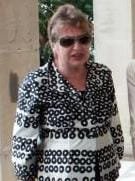
Mary Gaudron, the first woman appointed to the High Court of Australia, died on September 13, 2026. She was 83.
Gaudron sat on the High Court from 1987 until 2003. Before that she served as Solicitor-General of New South Wales from 1981 to 1987, the first woman in that office as well.
Born Mary Genevieve Gaudron in Moree, New South Wales, in 1943, she came from a working-class family. She left school at 15 and took a job as an office clerk in a law firm. She studied law part-time at the University of Sydney, graduated with honours, and was admitted to the bar in her early twenties. By the time she was appointed to the High Court in 1987, at age 44, she had already built a reputation as one of the sharpest barristers in the country.
Her appointment came from the Hawke government. She was the first woman in the court's 84-year history. The appointment made international news, and Gaudron herself said little about it at the time, preferring to let her work on the bench speak.
On the court she developed a reputation for independence. She wrote significant judgments in discrimination law, native title, and constitutional law. She sat on the Mabo decision in 1992, which recognised native title in Australian law for the first time. Her dissents were often pointed. Colleagues and lawyers who appeared before her described a judge who read the papers closely and had little patience for sloppy argument.
She retired from the High Court in 2003. After leaving the bench she joined the International Labour Organization and served as president of its Administrative Tribunal from 2011 to 2014. The tribunal hears disputes involving international civil servants. It was a quiet second act for a woman who had spent two decades at the centre of Australian public law.
Her time on the court overlapped with some of its most consequential eras. She served alongside chief justices Sir Anthony Mason and Murray Gleeson. When she joined, the court had never had a woman on it. When she left, it had, and the question was no longer whether a woman could sit on the highest court in the land but when the next one would.
The answer came quickly. Her departure opened the door for more appointments. In 2017 Susan Kiefel became the first woman Chief Justice of the High Court. Kiefel had appeared before Gaudron as a barrister. The court now counts several women among its justices, a direct line from the appointment Gaudron made possible.
Gaudron's own path to the bench was not conventional. She had no judicial experience before her appointment. She came straight from the Solicitor-General's office, where she had spent six years advising the New South Wales government. The leap from government advocate to High Court justice was unusual then and remains so now.
Her judgments were her own. She was not a joiner on the bench. She wrote separately often, and her reasons were frequently shorter than her colleagues'. Some lawyers found her style abrupt. Others found it clarifying. Both descriptions were probably accurate.
She was born in a small country town in northern New South Wales and ended her career settling disputes for the United Nations system in Geneva. The distance between those two points was not just geographic. Moree in the 1940s was a long way from the High Court in Canberra. She crossed that distance with a law degree earned at night, a bar practice built on talent, and an appointment that changed the institution.
The High Court confirmed her death on September 13, 2026. She was 83. The court she joined in 1987 had never seen a woman in its ranks. The court she left in 2003 had, and the court today sits with women among its number as a matter of course. That was her doing.
According to Dead-People.