
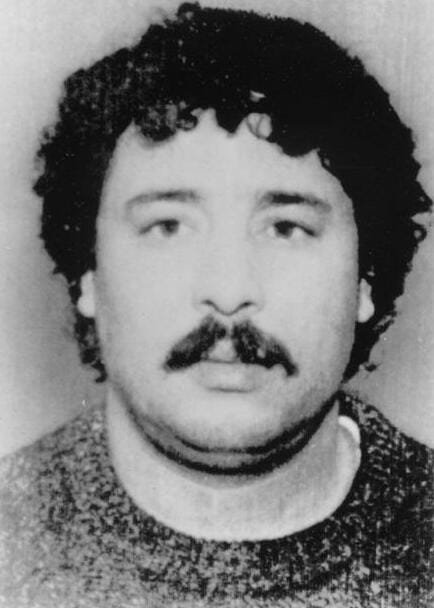
Lamin Khalifah Fhimah was a Libyan intelligence officer who was one of two Libyans charged in 1991 with the bombing of Pan Am Flight 103 over Lockerbie, Scotland, on 21 December 1988, in which 270 people died in what was at the time the deadliest terrorist attack in British history, was tried by a Scottish court sitting in the Netherlands and acquitted of all charges in January 2001 while his co-accused Abdelbaset al-Megrahi was convicted, and lived the remainder of his life in Libya after his acquittal. He died on 20 August 2026 at the age of 66.
He was born on 4 March 1960 in Libya and worked as a Libyan Arab Airlines station manager in Malta, the position whose significance in the prosecution case rested on claims that he had used his access to Malta’s Luqa Airport to place a suitcase containing the bomb onto a connecting flight that eventually reached Pan Am Flight 103 at Frankfurt and London Heathrow before the aircraft exploded over Scotland. The Lockerbie bombing, in which a Boeing 747 was destroyed by a bomb at cruising altitude, killing all 259 people on board and 11 people on the ground in the town of Lockerbie, was the deadliest aviation terrorist attack in history to that point and produced one of the most extensive criminal investigations in British legal history.
He and al-Megrahi were indicted in 1991 by Scottish and American prosecutors for their alleged roles in the bombing, and Libya’s refusal to extradite them led to UN Security Council sanctions against Libya that remained in place until an agreement was reached in 1999 for the suspects to be tried by a Scottish court under Scottish law but sitting at Camp Zeist in the Netherlands, a location that allowed the Scottish legal process to proceed while addressing Libyan concerns about trial in the United Kingdom or the United States. The trial began in May 2000 and the verdict was delivered on 31 January 2001, with al-Megrahi found guilty by a majority of the three-judge panel and sentenced to life imprisonment, while he was acquitted with the judges finding that the prosecution had not proved the case against him beyond a reasonable doubt.
His acquittal ended his direct legal jeopardy, and he returned to Libya where he lived for the remainder of his life. The Lockerbie case continued to be contested for decades after the trial, with al-Megrahi’s conviction disputed by his family, by some legal commentators, and by a Scottish Criminal Cases Review Commission report in 2007 that found grounds to question the conviction and refer the case for a new appeal. Al-Megrahi died in 2012 without completing his appeal, and the question of full accountability for the Lockerbie bombing remained unresolved at the time of Fhimah’s death. The families of the 270 victims of the bombing, for whom justice had been a decades-long pursuit, followed the developments in the case across those years with the investment of people whose personal losses gave the question of accountability its deepest human significance.
He lived for twenty-five years after his acquittal before his death in Libya in August 2026. He was 66 years old.