
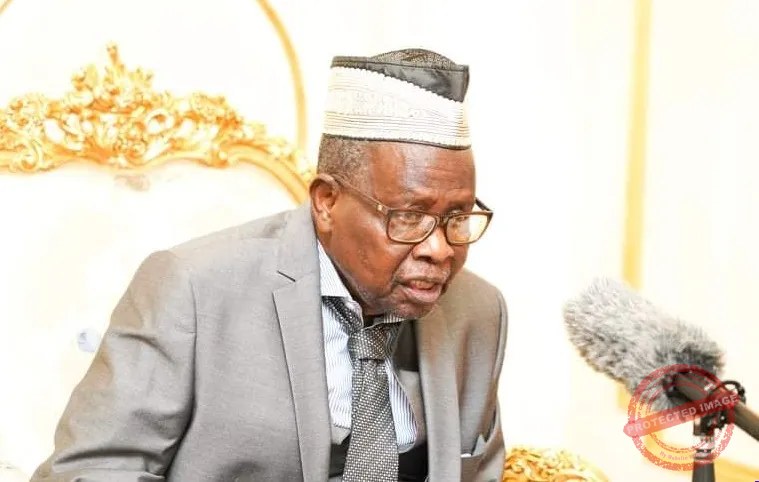
General Joseph Lagu Yanga, who led southern Sudan’s Anyanya rebellion and signed the peace deal that ended the country’s first civil war, died in Juba on Tuesday, October 27, 2026. He was 94.
“It is with profound sorrow and deep shock that I announce the peaceful passing of His Excellency, Gen. Joseph Lagu Yanga, which occurred this afternoon in Juba,” President Salva Kiir said. Kiir declared national mourning, ordered flags in South Sudan and at its missions abroad to fly at half-mast until the burial, and said he would bid Lagu farewell at a state funeral. Lagu’s family had appealed for prayers two days earlier after he was taken to hospital in Juba.
Leader of Anyanya
Lagu was born on November 21, 1931, in Momokwe, in what is now Magwi County in Eastern Equatoria. He went to school in Malek and Rumbek and was offered a place to study law at the University of Khartoum, but chose the Military College in Omdurman instead, graduating in 1960 and becoming an officer in the Sudanese army.
In 1963 he defected to join the southern rebellion against the government in Khartoum. He became commander of its armed wing, Anyanya, and in 1968 leader of the Southern Sudan Liberation Movement. Young officers who served under him included John Garang and Salva Kiir, the future leaders of the SPLM.
Peace and government
In 1972 Lagu signed the Addis Ababa Agreement with President Gaafar Nimeiry, with Ethiopia’s Emperor Haile Selassie as mediator. The deal ended a war that had begun in 1955 and gave the south a decade of regional self-government. Lagu rejoined the national army as a major general, oversaw the integration of former rebels and commanded the Southern Division in Juba.
He was president of the southern region’s High Executive Council from 1978 to 1979, and in 1982 Nimeiry appointed him second vice-president of Sudan. Nimeiry scrapped the Addis Ababa arrangement in 1983, a step that helped reignite war in the south. After Nimeiry was overthrown in 1985, Lagu moved to Britain. He later served as a roving ambassador and, from 1990 to 1992, as Sudan’s permanent representative to the United Nations.
Later years
Lagu twice turned down offers to advise President Omar al-Bashir. Ahead of the 2011 independence referendum he became a special adviser to Kiir, and Kiir said he “lived to see the birth of the country he fought for”. His memoir, Sudan Odyssey, was published in 2006. He is survived by several children, among them the politician Josephine Lagu, a former vice-president in the transitional government.