
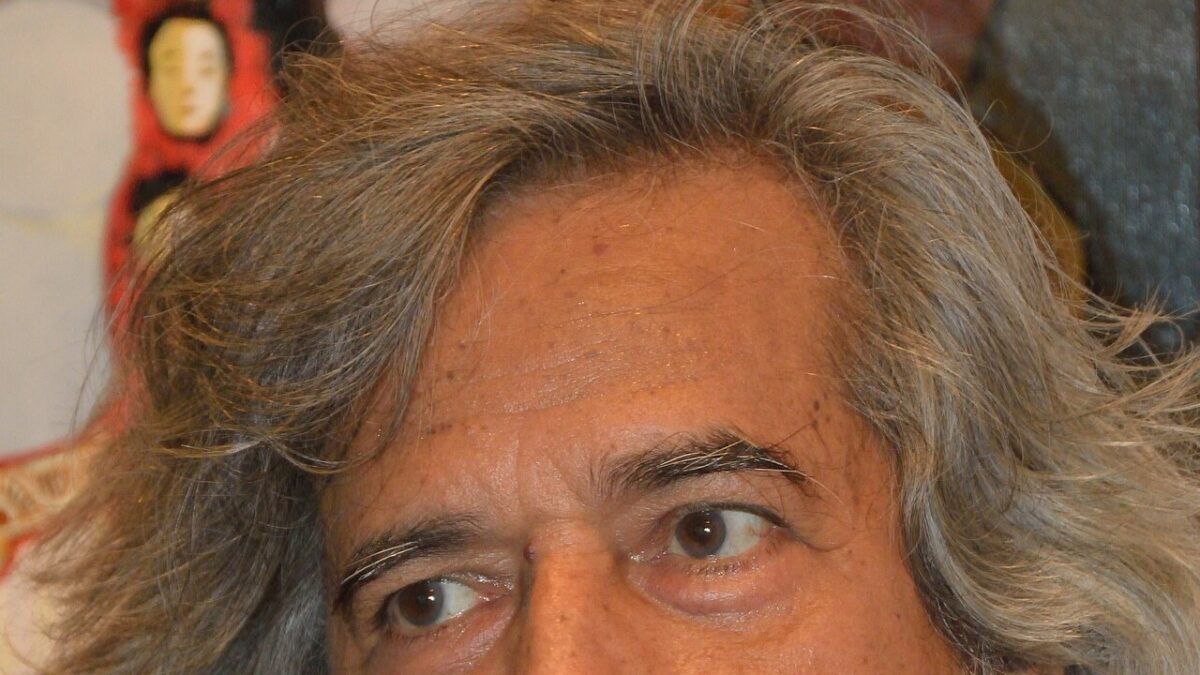
Jogen Chowdhury, one of India’s most celebrated painters and a former member of the Rajya Sabha, has died at the age of 87. He died at Ruby General Hospital in Kolkata at 10.15am on Sunday, October 25, 2026.
In a statement, the hospital said Chowdhury had been suffering from myeloproliferative neoplasm, a rare form of blood cancer, for the past 14 months and was undergoing chemotherapy. He was admitted on October 16 after falling ill, and had also needed hospital treatment for urinary tract infections during his illness.
A master of the line
Chowdhury was born in 1939 in Faridpur district, in what is now Bangladesh, and moved to Kolkata after Partition. He trained at the Government College of Art & Craft in Kolkata and then at the École nationale supérieure des Beaux-Arts in Paris, returning to India in the late 1960s.
He developed a style of his own after Paris: soft, swollen human figures drawn in ink, watercolour and pastel and built up from dense networks of fine lines. The figures often carried a quiet commentary on urban middle-class life and politics. He later taught at Kala Bhavana, Visva-Bharati’s art school in Santiniketan, where he lived and worked for decades and became professor emeritus.
From the studio to Parliament
Chowdhury was elected to the Rajya Sabha, the upper house of India’s Parliament, as a Trinamool Congress member and served from 2014 to 2020.
Tributes
West Bengal Chief Minister Suvendu Adhikari described him as an artist of exceptional stature whose legacy would remain “immortal through the ages”. “The body of work he left behind is a treasure for the state and the nation,” he said, noting that his paintings hang in government buildings including Rashtrapati Bhavan. Former chief minister Mamata Banerjee called him the pride of Bengal and India, and the painter Samir Aich said his death marked the end of an era in Indian art.