
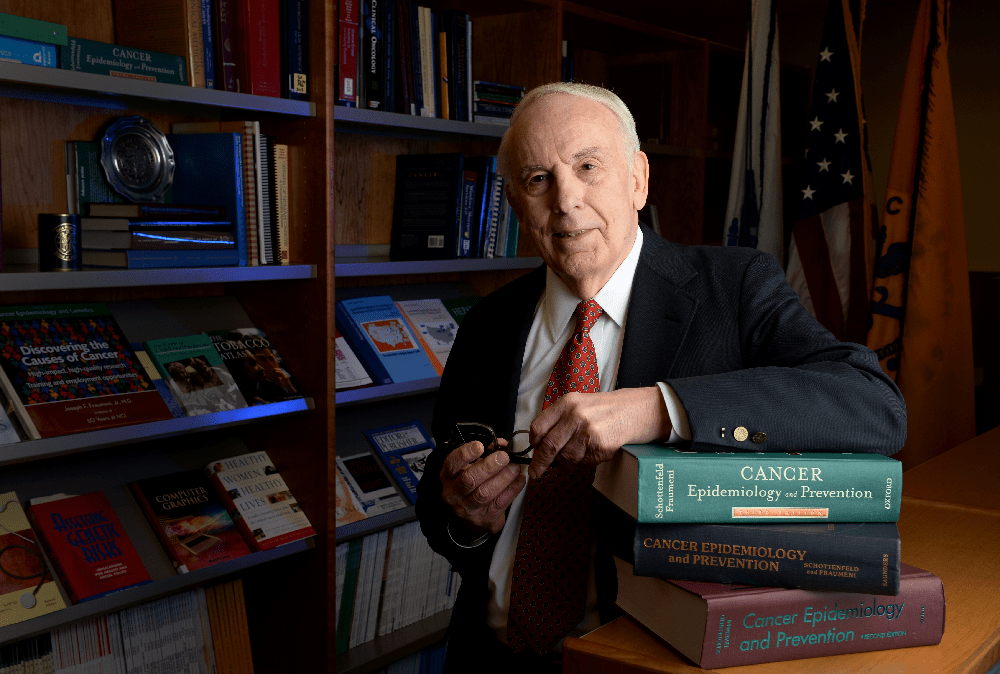
Joseph F. Fraumeni Jr. was an American cancer epidemiologist whose career at the National Cancer Institute spanned more than five decades and whose scientific work established the field of molecular epidemiology, the approach to cancer research that combines population-level epidemiological methods with the molecular biological analysis of genetic and environmental risk factors to understand why cancer develops in specific individuals and groups. He died in 2026 at the age of 88, having contributed more substantively to the scientific understanding of cancer’s causes than perhaps any other epidemiologist of his generation.
He was born on 9 June 1933 and joined the National Cancer Institute in 1962, beginning a career at the federal government’s premier cancer research institution that would last more than five decades and that would produce a body of scientific work whose influence on cancer research, clinical oncology, and public health policy was substantial and lasting. The NCI, established within the National Institutes of Health as the primary federal agency for cancer research since the National Cancer Act of 1971, was the institutional home for the most ambitious and systematic programme of cancer epidemiology in the world, and Fraumeni’s career there placed him at the centre of that programme across its most productive decades.
He is best known scientifically for his co-discovery, with Frederick Li, of Li-Fraumeni syndrome, a hereditary cancer predisposition condition caused by mutations in the TP53 tumour suppressor gene that dramatically increases the risk of multiple cancer types across the lifetime of those who carry the mutation. The identification of Li-Fraumeni syndrome, published in 1969, was one of the first demonstrations that specific inherited genetic mutations could create strong predispositions to multiple cancers, providing a crucial early piece of evidence for the genetic basis of cancer susceptibility that subsequent decades of molecular biological research have elaborated into the comprehensive understanding of cancer genetics that now informs both research and clinical oncology. Li-Fraumeni syndrome bearing his name is one of the most studied hereditary cancer syndromes in the scientific literature.
Beyond Li-Fraumeni syndrome, his career produced contributions to the understanding of environmental and occupational cancer risks, the epidemiology of specific cancer types including childhood cancers, brain tumours, and bone cancers, and the methodological foundations of cancer epidemiology that shaped how subsequent researchers designed studies and interpreted evidence about cancer causation. His work in establishing molecular epidemiology as a discipline that could integrate genetic and environmental approaches to cancer research was one of the most important conceptual contributions to the field of the second half of the twentieth century.
He served as director of the NCI’s Division of Cancer Epidemiology and Genetics and mentored generations of cancer epidemiologists whose subsequent careers built on the foundations his work established. His death at 88 in 2026 ended a scientific career of remarkable longevity and productivity, and the field of cancer epidemiology he helped create will carry his influence forward through the researchers he trained and the methods and questions he established as central to the discipline. He was 88 years old.