
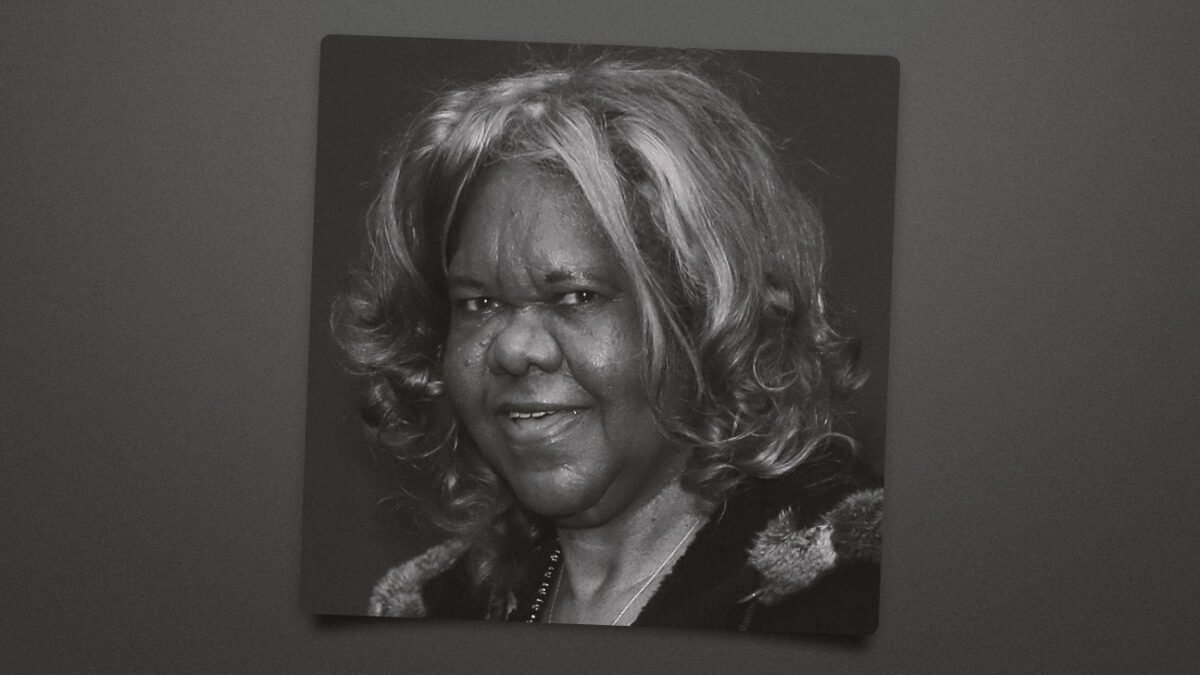
Barrett Strong was an American singer, songwriter, and record producer who recorded the original version of Money (That’s What I Want) for Berry Gordy’s Tamla label in Detroit in 1959 and whose subsequent decades-long songwriting collaboration with producer Norman Whitfield at Motown produced some of the most significant recordings in the history of soul music, including the Temptations’ psychedelic soul classics Cloud Nine, I Can’t Get Next to You, Papa Was a Rollin’ Stone, and Ball of Confusion. He died on 28 January 2023 at the age of 81.
He was born Barrett Strong on 5 February 1941 in West Point, Mississippi, and grew up in Detroit, Michigan, where Berry Gordy was building the music business infrastructure that would become Motown Records. Money (That’s What I Want), written by Gordy and Janie Bradford and recorded by Strong in 1959, was one of the first significant commercial successes for the Tamla label that preceded Motown and established the label’s ability to produce commercially competitive records. The song’s crossover appeal, reaching both the R&B and pop charts, demonstrated that Black popular music from Detroit could find mainstream audiences and laid the groundwork for Motown’s subsequent commercial breakthrough.
The song became one of the most frequently covered recordings in the history of popular music, with versions by the Beatles, the Rolling Stones, the Miracles, Freddie and the Dreamers, and dozens of other artists across multiple decades and genres demonstrating its enduring commercial and cultural currency. The Beatles’ recording of Money on their second album With the Beatles in 1963 brought the song to the massive British and international audience that the group was accumulating in the early phase of their career, and the subsequent British Invasion that the Beatles led brought American R&B influences back to American audiences through British versions of American originals that included Strong’s recording alongside Chuck Berry, Little Richard, and other foundational figures of rock and roll.
His return to Motown as a staff songwriter in the mid-1960s and his subsequent collaboration with Norman Whitfield produced one of the most remarkable creative partnerships in the history of American popular music. Whitfield, one of Motown’s most innovative producers, was developing an approach to soul music that drew on psychedelia, funk, and social commentary in ways that pushed far beyond the polished pop-soul formula of Motown’s commercial peak, and Strong’s lyrical contributions to their collaborations provided the language for a new kind of Motown music that reflected the social upheaval and political consciousness of the late 1960s and early 1970s.
Papa Was a Rollin’ Stone, released by the Temptations in 1972 and winning three Grammy Awards including Record of the Year and Best R&B Song, is the most celebrated of the Whitfield-Strong compositions, its extended funk groove and its portrait of a father’s absence and its consequences combining musical innovation with a social realism that was unusual in Motown’s catalogue and that represented the full development of the psychedelic soul direction that Whitfield and Strong had been pursuing since Cloud Nine in 1968.
His contribution to American popular music, as the performer of one of the most covered songs in history and as the co-writer of some of the most artistically ambitious recordings in the Motown catalogue, placed him among the significant figures in the development of soul music across its most creative decades. He was 81 years old.