
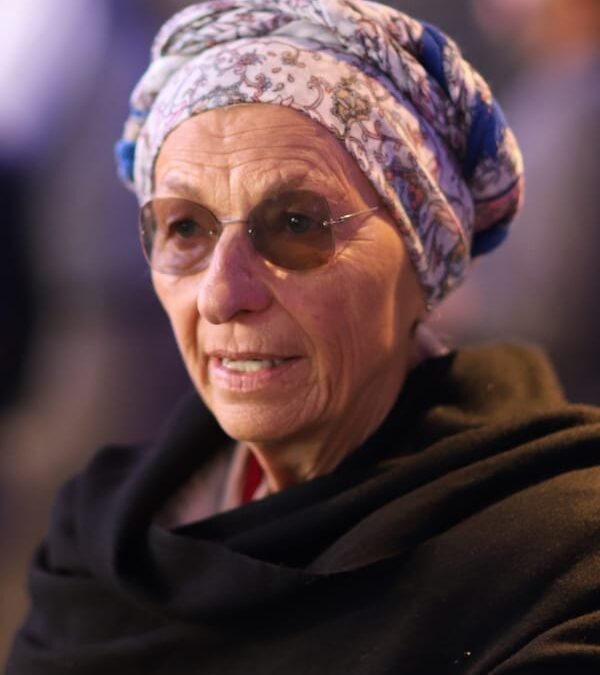
Emma Bonino, the Italian politician who served as foreign minister, senator and European commissioner, died on September 11, 2026, aged 78, after a battle with lung cancer.
Bonino was born in Bra, in Piedmont, on March 9, 1948. She became one of the best-known figures in Italian and European politics, holding office at every level from the European Commission to the Italian cabinet.
She served as Italy's minister of foreign affairs from 2013 to 2014, in the government of Enrico Letta. Earlier, she was minister of international trade from 2006 to 2008. Between those posts she sat as a senator for Rome from 2008 to 2013, and returned to the Senate for a second term from 2018 to 2022.
Her European career ran deep. She was elected to the European Parliament, and from 1995 to 1999 served as European commissioner for health and consumer protection. She was the first Italian woman to sit on the European Commission.
A graduate of Bocconi University in Milan, Bonino was a leading member of the Italian Radicals, the libertarian movement founded by Marco Pannella. The Radicals drove Italy's referendums on divorce and abortion in the 1970s and 1980s, and Bonino carried that campaign tradition into international institutions.
She built a reputation across Europe for humanitarian work and civil liberties advocacy. She campaigned on drug policy reform, on access to medicines, and on the rights of prisoners and migrants. Her years as commissioner for health and consumer protection put her at the centre of European food safety and public health debates in the late 1990s.
As minister of international trade from 2006 to 2008, she worked within the government of Romano Prodi. Her appointment as foreign minister in 2013 made her one of the few women to hold that office in Italy's modern history. She held the post for just over a year, during a period of coalition government.
She was a relentless public presence in Italian politics, known for direct speech and a willingness to take unpopular positions. Her advocacy for humanitarian intervention and for European integration set her apart in a political culture often defined by caution.
Bonino's death on September 11, 2026, came after a long public battle with lung cancer. She had continued to appear in public and in the Senate during her illness, maintaining the profile she had built over more than four decades in politics.
Her political life began in the Radicals, a party that operated more like a movement than a traditional organisation. It used referendums, civil disobedience and media campaigns to force issues onto the national agenda. Bonino was among its most effective figures, translating its domestic battles into a European and international language.
In the European Parliament she worked on human rights and on the institution's external relations. As commissioner she handled health and consumer protection at a time when the EU was expanding its regulatory reach. Her time in Brussels ran alongside the creation of the European Food Safety Authority, a body established in the wake of the BSE crisis.
She returned to Rome and to the Senate, where she served two separate terms for the capital. Her second term ran from 2018 to 2022, ending four years before her death.
Bonino was born in Bra, a town in the province of Cuneo, on March 9, 1948. She studied at Bocconi University in Milan, where she graduated before entering politics. Her career spanned national government, the European Commission, the European Parliament and the Italian Senate, a run of offices few Italian politicians have matched.
She leaves the Radicals, the movement she helped carry into the mainstream of European politics, and a record of advocacy on issues from civil liberties to humanitarian aid that extended well beyond Italy's borders. Her funeral arrangements had not been announced as of Friday.
According to Dead-People.