
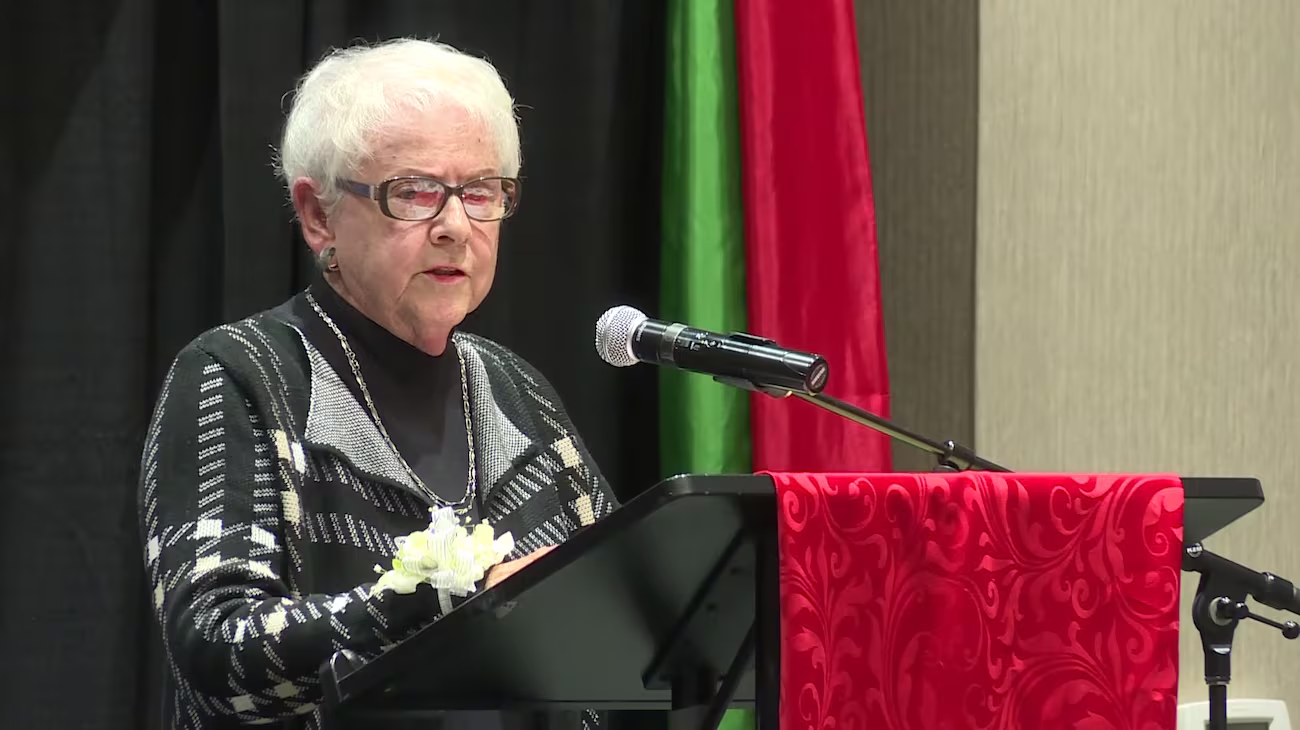
Ange Armato was an American woman who played professional baseball as one of the original members of the All-American Girls Professional Baseball League, the women’s baseball league that operated from 1943 to 1954 and that was established by Philip Wrigley to maintain public interest in professional baseball during the Second World War when the men’s major leagues were depleted by military service, and whose story was brought to wide public attention by the 1992 film A League of Their Own. She died in 2026 at the age of 96.
She was born in 1929 or 1930 and came of age in the specific historical moment that produced the AAGPBL, when the combination of wartime male military service and the economic and social transformations of the war years created an opening for women to participate in professional sports at a level that would have been commercially unthinkable before the war. The AAGPBL, which at its peak drew hundreds of thousands of fans to games in Midwestern cities including Rockford, Illinois, whose Rockford Peaches were one of the league’s most successful franchises, demonstrated that women’s professional baseball could be commercially viable and athletically compelling when properly organised and supported.
She played for the Rockford Peaches, the Illinois franchise that became the most successful team in the AAGPBL with four championships and that was the basis for the fictional Rockford Peaches in the 1992 film A League of Their Own, which introduced the story of women’s professional baseball in the 1940s and 1950s to a global audience that had previously known little about the league or its players. The Rockford Peaches, playing in Beyer Stadium before crowds that reflected the enthusiasm of a Midwestern city for its professional team, represented the best of what the AAGPBL achieved as an institution and as a sporting enterprise. Playing for a championship-calibre franchise in a professional league required the athletic ability, competitive drive, and team commitment that professional sports demand, and the women who played for the Peaches demonstrated those qualities across the years of the league’s existence.
The players who participated in the AAGPBL occupied a unique place in American sports history, having participated in a professional sport at a time when professional sports participation was effectively closed to women by the commercial and cultural assumptions that governed the sports industry. The recognition that came to the surviving players in the decades after the league closed, through the film and through the increasing scholarly and popular interest in women’s sports history that grew across the 1980s and 1990s, restored to them the public acknowledgement of their achievement that the original media coverage had not consistently provided.
She survived into her nineties, long enough to benefit from the renewed recognition that the film and the growing interest in AAGPBL history brought to the surviving players, and her death at 96 in 2026 marked the passing of one of the last living links to a chapter in American sports history whose rediscovery enriched the understanding of what women athletes accomplished in the mid-twentieth century. She was 96 years old.