
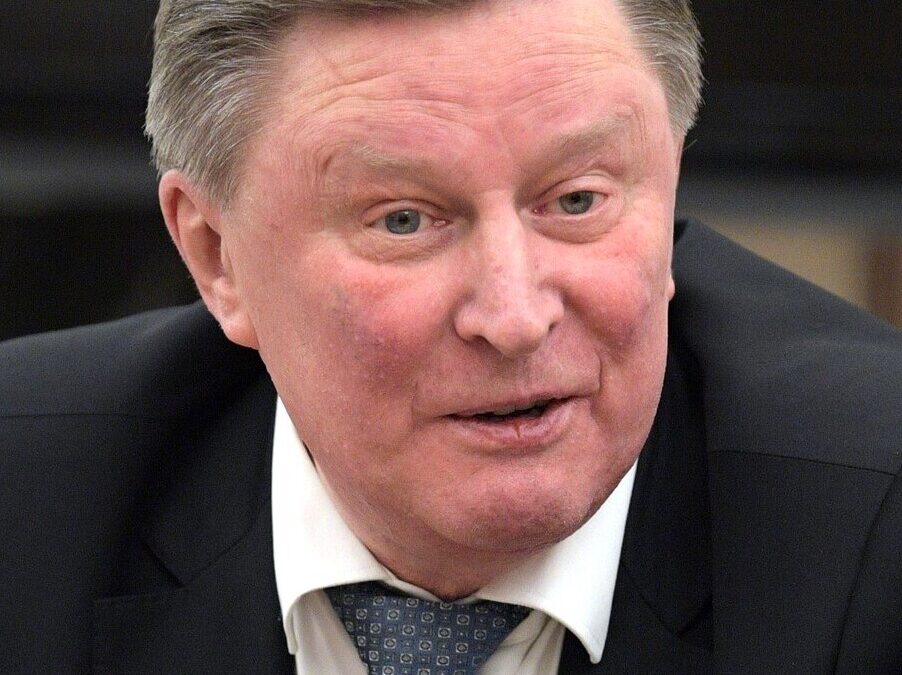
Sergei Borisovich Ivanov was a Russian politician and career intelligence officer who served at the highest levels of Vladimir Putin’s government for more than two decades, holding positions as Secretary of the Security Council, Minister of Defence, First Deputy Prime Minister, and Chief of Staff of the Presidential Administration, making him for a period of his career the most widely discussed potential successor to the president. He died on 26 June 2026 in Moscow at the age of 73 after an illness. The Kremlin confirmed his death without specifying a cause.
He was born on 31 January 1953 in Leningrad, the city that would revert to its pre-revolutionary name of Saint Petersburg after the fall of the Soviet Union. He studied at Leningrad State University and subsequently joined the KGB, the Soviet state security and intelligence service. His path crossed that of Vladimir Putin in the 1970s while both men served in the Leningrad directorate of the KGB, a connection that would define the subsequent trajectories of both careers when Putin rose to national leadership. He served in the KGB for more than twenty years, eventually reaching the rank of general in the Foreign Intelligence Service, the SVR, the KGB’s successor for foreign intelligence operations.
When Putin became Prime Minister in 1999 and then President in 2000, Ivanov was among the first of his Leningrad security service associates to be elevated to senior government positions. He was appointed Secretary of the Security Council in 1999, a role that placed him at the centre of Russia’s national security decision-making, and in 2001 he became Minister of Defence, a position he held for six years through 2007. As Defence Minister he oversaw the military during the period of its post-Soviet restructuring and during Russia’s continuing operations in Chechnya. In 2007 he was appointed First Deputy Prime Minister, one of the most senior positions in the government below the prime minister, with responsibility for defence industry and technology. That appointment, following his military ministerial role, kept him among the small number of figures most frequently discussed as potential successors to Putin.
He was appointed Chief of Staff of the Presidential Administration in 2011, a position that gave him immediate operational control over the day-to-day functioning of the Kremlin bureaucracy and direct proximity to Putin, and he held that role through 2016. In 2016 he was moved out of the administration and appointed Special Presidential Envoy on Environmental Activities and Ecology, a position widely interpreted as a demotion from the inner circle of power, reflecting the periodic repositioning of individuals around Putin that characterised Russian elite politics through the long period of his presidency. In that advisory role he worked on environmental issues including illegal logging, pollution in the Baikal region, and Russia’s obligations under international environmental agreements, a set of concerns distant from the security and defence portfolio that had defined his earlier career. He was 73 years old.