
Miriam Makeba sang “Pata Pata” one last time at a concert in southern Italy, walked off the stage and collapsed. She died a few hours later, on November 10, 2008. African music has lost many of its giants in ways that stayed with their audiences, and these are ten of them, in the order they died.
1. Franco Luambo (died October 12, 1989)
Franco led TPOK Jazz for more than thirty years and made Congolese rumba the sound of dance floors from Kinshasa to Nairobi. Fans called him the Sorcerer of the Guitar. He died in Namur, Belgium, where he had gone for treatment, aged 51. His recordings run into the hundreds of songs, and guitarists across the continent learned their trade from them.
2. Fela Kuti (died August 2, 1997)
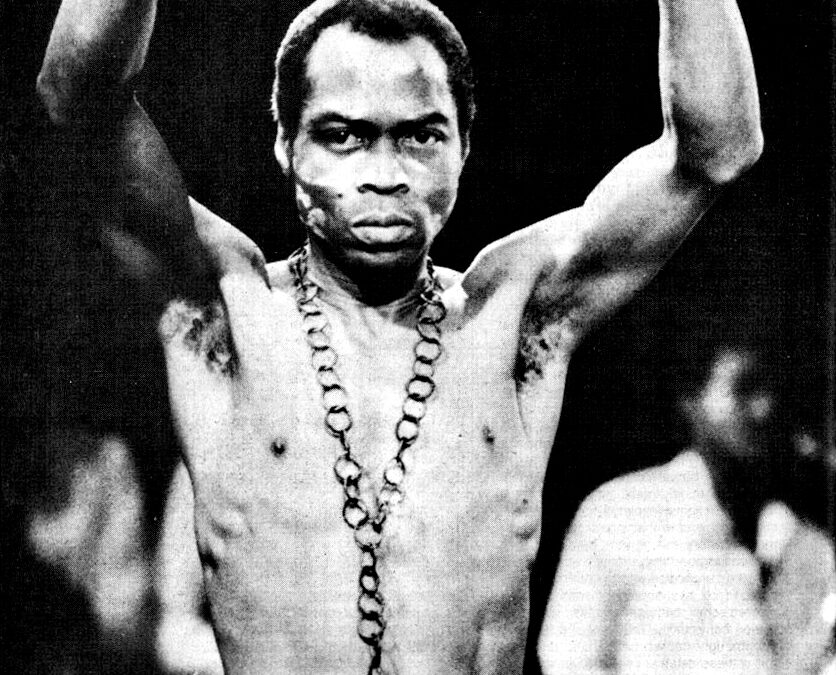
Fela created Afrobeat in Lagos and turned his club, the Afrika Shrine, into the centre of a running battle with Nigeria’s military governments. Soldiers burned his compound, Kalakuta Republic, in 1977. He died at 58 of complications related to AIDS, which his brother, the former health minister Olikoye Ransome-Kuti, announced publicly. Huge crowds followed his body through Lagos.
3. Ali Farka Touré (died March 7, 2006)
The Malian guitarist played the blues of the Niger River and won a Grammy for Talking Timbuktu, the 1994 album he made with Ry Cooder. He spent much of his later life farming in his home town of Niafunké, where he also served as mayor. He died of bone cancer in Bamako.
4. Miriam Makeba (died November 10, 2008)
Mama Africa spent about thirty years in exile after the apartheid government barred her from returning to South Africa in 1960. She sang at a benefit concert in Castel Volturno, near Naples, for the writer Roberto Saviano, who was living under threat from the Camorra. She collapsed as she left the stage and died of a heart attack at a nearby clinic. She was 76.
5. Papa Wemba (died April 24, 2016)
The Congolese singer, known as the king of rumba rock and the face of the Sapeurs’ sharp suits, collapsed during his first song at the FEMUA festival in Abidjan on the night of April 23, 2016. He died on the way to hospital early the next morning, aged 66. Congo’s culture minister confirmed his death the same day.
6. Hugh Masekela (died January 23, 2018)
Masekela’s “Grazing in the Grass” went to number one in the United States in 1968, and “Bring Him Back Home” became an anthem of the campaign to free Nelson Mandela. The trumpeter had also lived through decades of exile. He died of prostate cancer in Johannesburg, aged 78.
7. Oliver Mtukudzi (died January 23, 2019)
Tuku died in Harare exactly a year after Masekela, his friend and collaborator. His song “Todii”, which asked what to do about HIV in Zimbabwe, became one of the best-known African songs of the 2000s. He recorded more than sixty albums. He had diabetes and died aged 66.
8. Manu Dibango (died March 24, 2020)
The Cameroonian saxophonist’s 1972 song “Soul Makossa” was borrowed by Michael Jackson for “Wanna Be Startin’ Somethin'” and later by Rihanna. Dibango died in Paris at 86, one of the first world-famous musicians to die of COVID-19.
9. Tony Allen (died April 30, 2020)
Tony Allen was the drummer in Fela’s Africa 70, and the beat he played is the engine of Afrobeat. Brian Eno called him perhaps the greatest drummer who ever lived. He died in Paris five weeks after Dibango, aged 79, and his management said his death was not related to COVID-19.
10. Daddy Lumba (died July 26, 2025)
Charles Kwadwo Fosu, Daddy Lumba, was the most successful highlife singer of his generation, with a catalogue of hits that Ghanaians have played at weddings and funerals for more than thirty years. He died at the Bank Hospital in Accra after a short illness, aged 60. His death led to vigils by Ghanaians at home and abroad, and his funeral was planned for the Baba Yara Sports Stadium in Kumasi.
Ghana lost another pioneer early in 2026: Ebo Taylor, who had played with Fela in London in the 1960s, died on February 7, a day after launching a festival in his own name. Of the eleven musicians in this piece, he was the one who lived long enough to be celebrated by the country he had played for since before independence.