
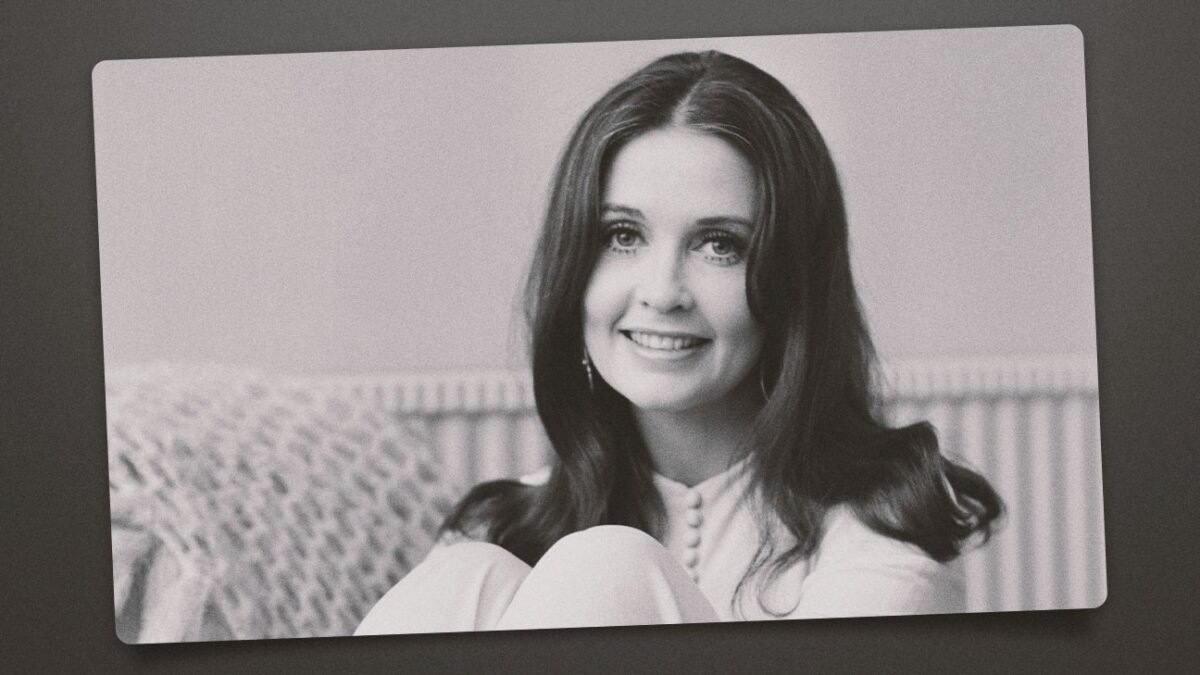
Anjanette Comer, the actress whose career seemed to stall just as it was about to soar, died on May 28 at UCLA Santa Monica Medical Center. She was 86. A death certificate filed with the Los Angeles County Department of Public Health confirmed her passing and cited leukemia and heart issues as her causes of death.
Comer’s name appeared in the 1960s as a rising star, but her choices kept her from becoming a household name. She was offered the chance to star opposite Robert Redford in "Barefoot in the Park" and alongside Warren Beatty in "Bonnie and Clyde," both landmark 1967 films. She declined both roles. Jane Fonda took the part in "Barefoot in the Park," and Faye Dunaway played Bonnie Parker. Comer later explained in a 1981 interview that she turned down the parts because she was involved in a relationship with an actor who didn’t want her to work in movies. She said she was young and naive and that she hated her career at the time.
Her career was further hindered by a reputation for being difficult. In 1966, she backed out of filming "Funeral in Berlin," a sequel to "The Ipcress File," after leaving Germany during shooting to be with her boyfriend on weekends. She was replaced by Eva Renzi. Comer admitted to a reputation for being crazy, saying, “I guess I was crazy. You see, I didn’t build my career slowly like most successful actresses do. After a couple of TV appearances, I became an instant movie star. I didn’t know how to handle it all emotionally.”
Born on August 7, 1939, in Dawson, Texas, Comer attended Dawson High School. She was voted queen of the Corsicana Fair and Rodeo at age 16. She studied acting at the Pasadena Playhouse, where agent Byron Raphael spotted her and signed her. Her early work included guest spots on "My Three Sons," "The Donna Reed Show" in 1962, and later "Gunsmoke," "Ben Casey," and "Arrest and Trial," which earned her a supporting actress Emmy nomination for her role as a hooker.
Her big break came with her appearance in "Quick, Before It Melts" in 1964, where she played a flight attendant. That same year, she was invited to audition for the role of Aimee Thanatogenous in Tony Richardson’s "The Loved One." She initially thought it was a joke but was later cast after a personal meeting with Richardson. The film featured her alongside George Morse, with whom she shared a memorable line about burial methods: “Some people just lately have preferred ensarcophagusment.”
Critics responded favorably. Bosley Crowther of The New York Times called her "the honey-voiced, nitwit girl" who falls in love with the main character. Comer’s filmography in the mid-1960s included a part in Sidney J. Furie’s "The Appaloosa" (1966) with Marlon Brando and John Saxon, and a role in "Guns for San Sebastian" (1968). She also appeared with Robert Wagner and Jill St. John in "Banning" (1967).
Her later films, such as "In Enemy Country" (1968), "Rabbit, Run" (1970), and "The Firechasers" (1971), did not achieve the same recognition. Her performance in the 1973 horror film "The Baby" as a social worker earned praise from fellow actress Marianna Hill, who noted Comer’s dedication to her craft. Hill recalled Comer saying she planned to create an inner life for her characters.
Comer’s career included a few TV appearances, such as "Bonanza," "Mod Squad," "Love, American Style," "Mannix," "Columbo," "Jake and the Fatman," "The Blue Knight," "Hotel," and "The Practice." She also starred in films like "Lepke" (1975), "Fire Sale" (1977), Steven Soderbergh’s "The Underneath" (1995), and "A Bird of the Air" (2011).
Her personal life included a marriage to Robert Klane, the screenwriter and director known for "Weekend at Bernie’s" and "Thank God It’s Friday." The couple married in 1976 and divorced in 1983. She was survived by her older sister, Jerra Tillman, who chose not to comment on her death.
In her 1981 interview, Comer expressed hope to revive her career, saying she was "absolutely certain I will get back to the high point of my career." She believed she could do it again, but her choices in the 1960s and her emotional struggles left her career in a state of limbo.
Comer’s story remains a reminder of the fragile line between early promise and missed opportunities in Hollywood. Her decision to turn down roles that might have changed her trajectory reflects the unpredictable nature of fame. Her death leaves behind a picture of a woman who, despite setbacks, had a career that spanned nearly five decades, with moments of recognition and respect from her peers.
According to Hollywood Reporter.