
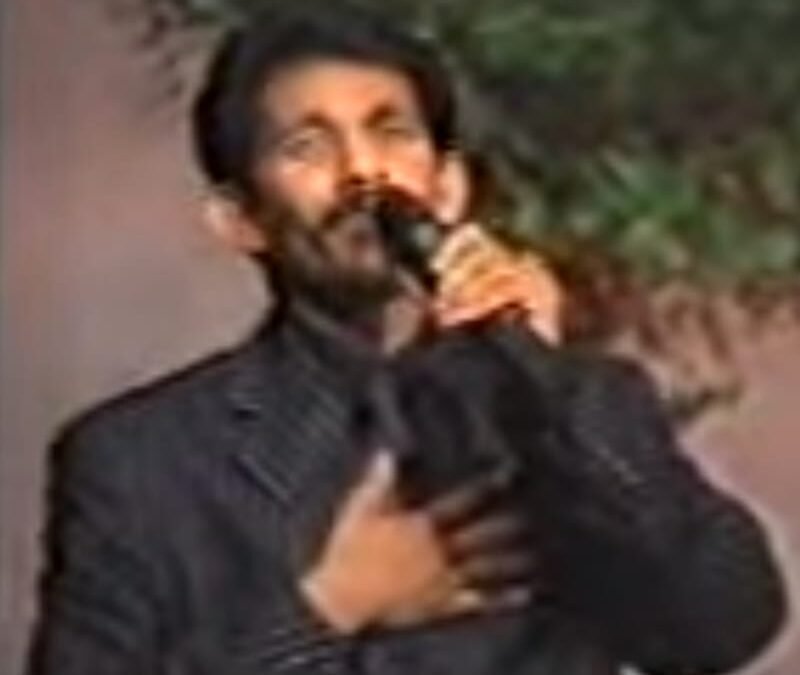
Jose Rod was a Goan musician who was one of the beloved performers in the tiatr tradition, the Konkani-language theatre form that is one of the most distinctive cultural institutions of Goa, the Indian state on the western coast of the country whose Portuguese colonial history from the sixteenth century until 1961 gave it a cultural character distinct from the rest of India and whose Konkani-speaking Catholic community has maintained the tiatr tradition as a living form of popular entertainment and social commentary across more than a century. He died in 2026 at an advanced age.
He was born in Goa and came to tiatr as part of the tradition’s community of performers, the singers, actors, and comedians who participate in the uniquely Goan form of musical theatre that has been central to the social and cultural life of the Goan Catholic community since its emergence in the late nineteenth century. Tiatr, derived from the Portuguese word for theatre, combines elements of the Portuguese theatrical tradition with Konkani musical styles, comedy, and social commentary to create a form that is both entertainment and a vehicle for the expression of Goan community concerns, values, and perspectives. The tiatr tradition has historically addressed subjects including social problems within the Goan community, political developments affecting Goa, the experience of Goan emigration to East Africa, the Gulf, and other destinations, and the comic and romantic situations that provide the entertainment value that keeps audiences engaged.
The music of tiatr, performed as songs called kantaram interspersed through the theatrical narrative, is one of the form’s most valued elements, and singers who can deliver these songs with the combination of vocal ability and dramatic expression that the form demands are among the most celebrated performers in the tradition. The kantaram tradition draws on both the Konkani folk music heritage and the Portuguese-influenced musical styles that Goa’s colonial history produced, creating a musical culture that is genuinely distinctive and that has no direct equivalent elsewhere in Indian music. Performers who dedicate their careers to the tiatr stage contribute to the preservation and development of a living cultural tradition whose continuity depends on each generation of performers carrying the knowledge and skills of the form forward.
The Goan diaspora, spread across multiple continents through the emigration patterns of the Goan Catholic community over the past century, has maintained its connection to tiatr through touring productions that bring performances to Goan communities in Kenya, Portugal, the United Kingdom, Canada, and elsewhere, and through recordings that allow the Konkani-speaking diaspora to stay connected to the cultural form that is one of the most distinctive expressions of Goan identity. Performers who are beloved in the Goa-based tiatr community are beloved across this global community of Goan culture.
He was mourned by the tiatr community and by the wider community of people who value Goan cultural life as the loss of a performer who had contributed to the living tradition that tiatr represents across his years of engagement with it. He died in 2026.