
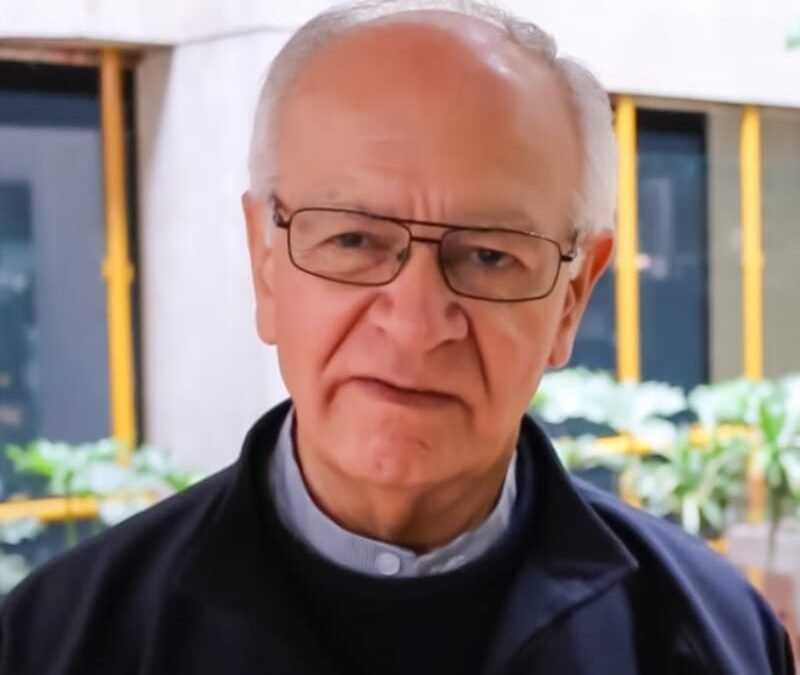
Javier Giraldo Moreno was a Colombian Jesuit priest, human rights defender, and founder of the Inter-Congregational Commission for Justice and Peace, one of Colombia’s most significant human rights organisations, who documented the violence of Colombia’s armed conflict with extraordinary systematic rigour across more than three decades and who became one of the most respected and internationally recognised voices for justice and accountability in a country whose civil conflict produced hundreds of thousands of deaths and millions of displaced people. He died on 6 September 2026 at the age of 82.
He was born Javier Giraldo Moreno on 8 October 1944 in Colombia and was ordained as a Jesuit priest, joining the Society of Jesus, the Catholic religious order founded by Ignatius of Loyola in 1540 and historically associated with education, intellectual engagement, and social justice work. The Jesuit tradition’s engagement with human rights and social justice has been particularly significant in Latin America, where the liberation theology movement that developed in the 1960s and 1970s drew on Jesuit and other Catholic religious thinking to argue for the church’s preferential option for the poor and for the active engagement of religious institutions with social and political injustice. In Colombia, where the church’s relationship with both the state and the armed actors of the civil conflict was complex and contested, Jesuit human rights work represented a particular commitment to the most vulnerable victims of the violence.
He founded the Inter-Congregational Commission for Justice and Peace in 1990 and built it into one of the most important human rights documentation and advocacy organisations in Colombia, producing detailed reports on massacres, forced disappearances, extrajudicial killings, and other atrocities committed by both state forces and guerrilla and paramilitary organisations across the decades of the conflict. The methodological rigour of the commission’s documentation work, which sought to record each case of violence with the names, circumstances, and alleged perpetrators that formal accountability processes require, gave its reports a credibility and usefulness that distinguished them from less systematic human rights documentation and that made them essential reference points for both Colombian and international efforts to understand and address the conflict’s violence.
His personal courage in documenting abuses by state forces and paramilitary organisations that operated with the tolerance or active support of the Colombian military and security services made him a target for threats and intimidation across the years of his work, and his refusal to be silenced despite those threats became itself a form of witness to the human rights principles he defended. He received international recognition for his human rights work including honours from European governments and human rights organisations that acknowledged both the importance of his documentation work and the personal risk it carried.
He died on 6 September 2026 at the age of 82, having dedicated more than three decades to the documentation of Colombia’s human rights crisis and the pursuit of justice for its victims. He was 82 years old.