
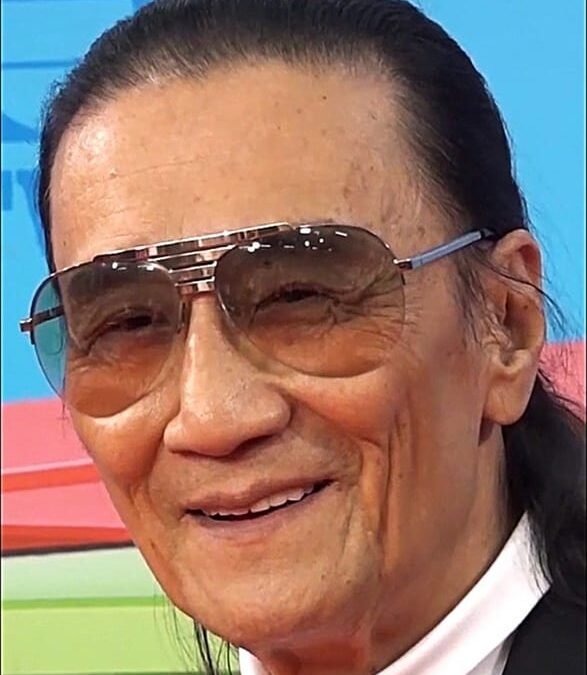
Patrick Tse Yin was a Hong Kong actor who was one of the most celebrated and iconic stars of Cantonese cinema, whose career from the 1950s through the 2010s spanned more than six decades and made him a living connection between the earliest era of post-war Hong Kong cinema and the contemporary Hong Kong film and television industry. He died in 2026 at the age of 88, his death mourned across Hong Kong and the broader Chinese-speaking world whose cinema he had helped to define.
He was born William John Tse Yin on 23 November 1939 in Shanghai, China, and moved to Hong Kong where his acting career began in the 1950s and where his combination of physical attractiveness, natural screen presence, and acting ability quickly established him as one of the most popular young actors in Cantonese film. Hong Kong cinema in the 1950s was producing films primarily for the Cantonese-speaking communities of Hong Kong and the overseas Chinese diaspora in Southeast Asia, providing an entertainment industry whose commercial foundation was the appetite of these communities for films in their own language that reflected familiar experiences and cultural references.
His ascent to stardom in the early 1960s coincided with the transformation of Hong Kong cinema as the commercial studios that dominated the industry developed their star systems and their genre formulas for reaching the broadest possible Chinese-speaking audiences. His romantic roles in the melodramas and action films of the period made him the object of widespread female fan devotion, the specific kind of celebrity that popular cinema creates for its most physically attractive and charismatic performers. His physical appearance, which remained remarkably youthful well into his senior years, was itself part of his public identity and contributed to the near-mythological quality that his longevity in the public eye created.
He worked across the full range of popular film genres that Hong Kong cinema produced across the decades of his career, adapting to the changing tastes and technical evolution of the industry while maintaining the screen presence and professional reliability that sustained his career through the transitions of the Hong Kong film industry from its Cantonese-language origins through the dominance of Mandarin-language studios in the 1960s and 1970s and into the commercial cinema of the 1980s and 1990s whose international breakthrough in action film made Hong Kong cinema a global cultural product. His son Nicholas Tse became one of Hong Kong’s most celebrated entertainers of the following generation, a career inheritance that gave the elder Tse the satisfaction of seeing his professional legacy continued within his own family.
He received recognition from the Hong Kong film industry for his contribution to Hong Kong cinema’s history, including lifetime achievement honours that acknowledged the extraordinary duration and consistent quality of a career that had helped to define what Hong Kong popular cinema looked like across six decades of its development. His connection to the early history of post-war Hong Kong cinema gave him a historical significance that transcended his individual performances, as one of the last surviving links to the period when Hong Kong’s film industry was establishing the foundations on which its subsequent achievements were built.
He died in 2026 at the age of 88, mourned by the Hong Kong entertainment community and by the audiences whose love of his films had sustained his career across more than six decades of professional performance. He was 88 years old.