
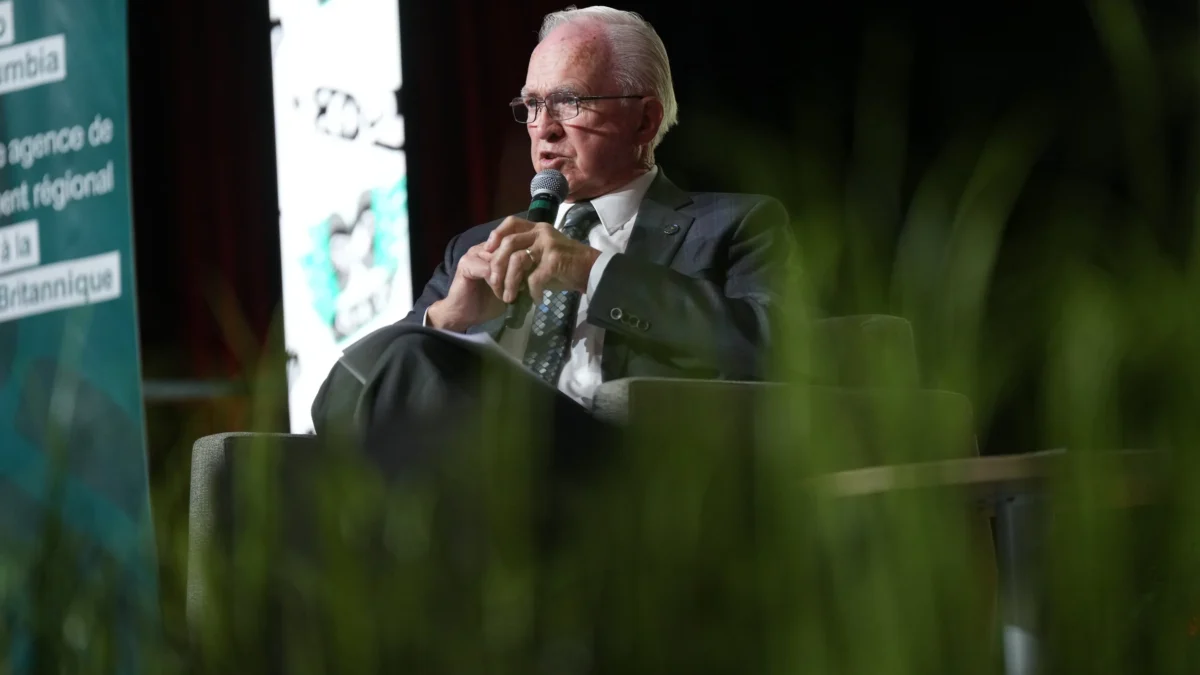
Tom Siddon was a Canadian federal cabinet minister in the Progressive Conservative government of Brian Mulroney who held the portfolios of Indian Affairs and Northern Development and subsequently Fisheries and Oceans during the early 1990s, a period of intense public attention to Indigenous rights issues in Canada that was dramatically crystallised in the summer of 1990 by the Oka Crisis, the armed standoff between Mohawk Warriors and the Quebec provincial police and subsequently the Canadian Army over land rights near the town of Oka, Quebec. He died in 2026 at an advanced age.
He was born in Canada and built a career that combined scientific training in physics with his service as a member of parliament for the British Columbia riding of Richmond, British Columbia. His election to the House of Commons as a Conservative member from British Columbia gave him a parliamentary career that coincided with the Mulroney government’s 1984-1993 tenure, during which he rose to cabinet rank and held some of the most consequential portfolios for the relationship between the federal government and Canada’s Indigenous peoples.
The Indian Affairs and Northern Development portfolio, which oversaw the federal government’s responsibilities for the treaties, land claims, governance arrangements, and social services that defined the Crown’s relationship with First Nations, Inuit, and Métis peoples, was one of the most complex and politically charged ministerial responsibilities in the Canadian federal government. The department administered a relationship between the Canadian state and Indigenous peoples whose history encompassed the treaties of the nineteenth century, the residential school system whose documented abuses were beginning to receive public acknowledgement, the Indian Act whose paternalistic controls had governed aspects of First Nations life for more than a century, and the land claims negotiations whose resolution was essential to establishing clear title to large portions of Canadian territory.
The Oka Crisis of July and August 1990 was triggered by the municipality of Oka’s plans to expand a golf course on land the Mohawk community of Kanesatake had long claimed as their traditional territory and burial ground. The Mohawk response included the construction of barricades that blocked provincial roads, a standoff with the Sûreté du Québec that escalated dramatically when police attempted to break through the barricades and one officer was killed in the resulting confrontation, and a subsequent seventy-eight-day standoff that drew the Canadian Army and attracted international attention to the unresolved land claims that were at its root. As Minister of Indian Affairs, Siddon was directly responsible for managing the federal government’s response to a crisis that had both immediate security dimensions and fundamental questions about Indigenous land rights and the failures of the Canadian state to address legitimate land claims over preceding decades.
His subsequent role as Minister of Fisheries and Oceans engaged him with the equally contested questions of fisheries management on both coasts of Canada, where the competing interests of commercial fisheries, Indigenous fishing rights, conservation science, and coastal communities created policy challenges of comparable complexity to those of the Indigenous affairs portfolio. Fisheries management on the Pacific Coast, in particular, engaged questions about salmon stocks, Indigenous fishing rights under Section 35 of the Constitution, and the economic interests of the fishing industry whose tensions were live issues throughout his ministerial tenure.
He was remembered by the political community as a minister who had served in portfolios of genuine consequence during a period of significant policy development and political crisis in both Indigenous affairs and natural resource management. He died in 2026.